Labels: Diary of a Bad Year, Dissertation, J.M. Coetzee
![]() | Sobriquet Home | Author Index | About Us | Book Reviews | Music Reviews | Email | Punk Encyclopedia | Punk Links | Writers | |
|
SobriquetAbout the Blog About the Zine Record Reviews mediaconsumption
AcademiaPhinisheD The Chronicle The MLA
Cruciverbalism
Cruciverb.com
Music
SportsCincinnati Bengals New York Yankees Cleveland Cavaliers Montreal Canadiens ESPN
NewsReuters New York Times Cleveland Plain Dealer Newark Star-Ledger Chicago Tribune Minneapolis Star-Tribune St. Paul Pioneer Press Washington Post Los Angeles Times San Francisco Chronicle Christian Science Monitor San Jose Mercury News Boston Globe Dallas Morning News Miami Herald Houston Chronicle Chicago Sun-Times Denver Post Detroit Free Press San Diego Union-Tribune Detroit News Baltimore Sun Atlanta Journal-Constitution Sacramento Bee Kansas City Star Orlando Sentinel Seattle Times St. Petersburg Times Indianapolis Star Boston Herald Tampa Tribune Orange County Register Milwaukee Journal Sentinel Hartford Courant St. Louis Post-Dispatch Columbus Dispatch Louisville Courier-Dispatch The Oklahoman Norfolk Virginian-Pilot Los Angeles Daily News Philipine Star Omaha World-Herald Richmond Times-Dispatch Pittsburgh Post-Gazette Philadelphia Inquirer Arizona Republic San Antonio Express-News Pittsburgh Tribune-Review American Reporter Portland Oregonian Charlotte Observer Fort Worth Star-Telegram Terre Haute Tribune-Star Sacramento Union Washington Times The National Ledger Anchorage Daily News Charleston Gazette Ashland Daily Tidings The Daily Star
|
Friday, May 16, 2008
Although I would have liked to have gotten some writing done today, I decided to spend some time tidying up my workspace instead. Now, I have always been the sort of person for whom clutter is normal. If anything, I prefer the chaotic to the ordered, if only because the law of entropy tells me that anytime I clean something, it's just going to get dirty again. (Seriously, why make a bed if you're only going to unmake it later? Unless you're having guests over, of course.). The problem, I find, is that during periods of heightened stress (marathon paper-writing sessions, especially) my manageable mess evolves into a sort of all-encompassing mass of clutter, which can be depressing to look at and can make the simple act of walking a treacherous ordeal. So, I cleaned up and already I feel better. Furthermore, though I thrive in clutter, I loathe the other, non-human entities that flock to piles of paper and books, clusters of empty diet soda cans and discarded packaging materials. So, yeah. I have the feeling writing will be a bit more pleasant now.Other than that, I have made some more progress in Diary of a Bad Year. I especially enjoy Coetzee's skewering of university life. Like Elizabeth Costello before him, the protagonist of Diary of a Bad Year regards universities as business enterprises wholly unrelated to education. Elsewhere, the fictional author at the center of the novel, blames the over-usage of poststructuralist theory in literature departments for the increasingly absurd misappropriation of its relativistic thought by paranoid, dimwitted politicians eager to find meaning hidden where nothing is hidden. I'm also finding that, by reading the novel in the traditional mode I described yesterday, the book reads very smoothly, enabling the reader to make subtle (and not-so-subtle) connections between the various characters and sub-texts. So, yeah. I'm enjoying it. For tomorrow: It's a busy day, so just read some more. Labels: Diary of a Bad Year, Dissertation, J.M. Coetzee Copyright Sobriquet Magazine Share:
Thursday, May 15, 2008
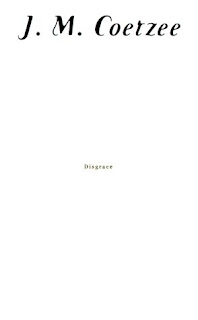
For whatever reason, I have not been able to get my blog to publish properly this evening, so while I am writing this late Wednesday evening, I have no idea whether or not it will appear anytime soon. It's frustrating because I actually have quite a bit to say and the excitement of instant publication has been replaced by a deflated sort of resignation.At any rate, I began reading Coetzee's Diary of a Bad Year this evening. I bought the book back in the fall, when it had only been released in parts of Europe and South Africa (that's the cover in the upper left-hand corner), paying the extra money to import the novel before it hit U.S. shelves (the American cover is further down on this page). My intention, of course, was to read the novel as soon as I could, seeing if it would fit into what was then supposed to be a dissertation chapter on Coetzee's fiction I'd planned to write between semesters. I'd hoped to write a solid fifty pages or so on the author's fiction since 1990, in an attempt to flesh out and expand the brief essay I'd written on Disgrace a few years ago. Then I was going to move on to Philip Roth or Joseph Heller. Now, after somehow stretching what I'd intended to be five or ten pages on Age of Iron into a full chapter in its own right, I find myself looking at Diary of a Bad Year, wondering if it will yield a full chapter, too. Strange how things change. I just wish I'd have known then that I would be spending the next six months reading all of Coetzee's other novels so that I wouldn't have spent the extra cash to import the book. Mais, c'est la vie, n'est-ce pas? So, anyway, getting to the book. Diary of a Bad Year is not a normal-looking novel. In fact, it's the sort of novel whose structure Alain Robbe-Grillet would have been defending had it been published a half-century earlier. Indeed, Diary of a Bad Year forces the reader to contemplate what he or she believes about what makes a novel a novel. Each page of Coetzee's text presents multiple sub-texts, each separated by a thin black line. The topmost passage, invariably, comes from a series of essays that the fictional author ostensibly writing the novel intends to publish as part of an anthology titled Strong Opinions. The second and third passages, taken from the diaries of the fictional author and his secretary, form a metafictional narrative of the events surrounding the preparation of the manuscript, especially the interactions between the author and his newly-hired typist. Of course, the question of how to read the novel has already generated some buzz in the blogosphere and in more mainstream reviews. Does one, for instance, simply read each page from left to right and top to bottom, as is customary? Or do we read each section individually, following one narrative from beginning to end before flipping back to page one and starting with the next narrative? Do we read each essay and the accompanying diary entries as separate sections? Does it matter? I, for one, have decided to read this untraditional novel in the most traditional of ways. I will start at the first page, read it from top to bottom, then turn it over and repeat the process until I have finished the book. My reasoning is this: if Coetzee really, really wanted up to read each section separately, wouldn't he have written the novel in such a way as to make that the logical choice? You know, by placing each section one after the other like Fowles did in The Collector, by placing Ferdinand's journal before and after Miranda's... We'll see how it turns out. In naming the fictional book of essays Strong Opinions, Coetzee makes a clear reference to Vladimir Nabokov, whose assorted essays, interviews, and other bits of non-fiction were collected in a volume with the same title and, like the Russian-American master's Pale Fire, Diary of a Bad Year seems poised to question the nature of textuality and authority. This is, of course, familiar terrain for Coetzee, who has long placed the act of writing under a microscope, scrutinizing the boundaries between author and fiction in nearly all of his work. In Dusklands, for instance, both "The Vietnam Project" and "The Narrative of Jacobus Coetzee" feature characters with the author's last name, a Kafkaesque trick (Joseph K., anyone?) he reprises in Diary of a Bad Year by bestowing both his own last name as well as elements of his own biography to the fictional author. In both Foe and The Master of Petersburg, Coetzee fictionalizes actual novelists and spins new tales from Robinson Crusoe and The Possessed, respectively. In his memoirs, Coetzee writes about himself in the third person. Elizabeth Costello has served as his mouthpiece in The Lives of Animals and Elizabeth Costello, penning essays that could easily have appeared in Strong Opinions (not to mention problematizing things by appearing in Slow Man and suggesting the possibility that she, not Coetzee, writes the novel). I'm sure critics and scholars will be as eager to revisit these texts after reading Diary of a Bad Year as I am. But it's late, and I still can't get this thing to publish. So I will call it a night. For tomorrow: Read some more of Diary of a Bad Year and/or write a bit more on The Master of Petersburg. Labels: Age of Iron, Diary of a Bad Year, Dissertation, Dusklands, Elizabeth Costello, Foe, J.M. Coetzee, John Fowles, literature, The Collector, The Master of Petersburg Copyright Sobriquet Magazine Share:
Wednesday, May 14, 2008
I've had an oddly productive few days here. In just this past week, I've finished Cormac McCarthy's The Road, Chuck Palahniuk's Diary, Coetzee's Foe, and a good, long chunk of Richard Matheson's I Am Legend. Oh, and I wrote another bit today, so I'm in surprisingly good shape.Strange how a few days off can change one's life for the better... For tomorrow: Either write a bit more about The Master of Petersburg or read what little Coetzee I haven't yet read.
Copyright Sobriquet Magazine Share:
Tuesday, May 13, 2008
I managed to get some writing done this afternoon, which was nice. As I'd suspected, the anxiety I'd been wrestling with lately vanished as soon as classes ended and my schedule opened up. Still, I'm tired of this chapter and cannot wait to wrap it up, even though I fear it won't be accepted in its current incarnation.Ugh. But it's late and I am heading to bed, so all I will say is that I'd like to finish Foe tomorrow. I'm not sure I'm in the mood to write two days in a row, so I'll make writing optional. Labels: Dissertation, dissertation anxiety Copyright Sobriquet Magazine Share:
Sunday, May 11, 2008
I had a feeling yesterday that I woudn't get any writing done today. I've been tired lately and I figured that I would be lacking the energy to produce anything worth reading. And, I'm sure, there's a bit of the "it's the end of the semester and I don't have to cram writing into my itty-bitty periods of free time" feeling, too.So I spent a few too many hours sleeping this afternoon (oh, but it was divine) and continued reading in Foe for the remainder of the day. I also spent some time listening to the audiobook of Cormac McCarthy's excellent The Road, which I will likely be featuring in one of my classes next semester. So, it was a good, lazy Sunday for me. Finally. For tomorrow: Read the rest of Foe and/or write a bit more on The Master of Petersburg Labels: Dissertation Copyright Sobriquet Magazine Share:
Well, I've already written a long post for the day, so this one will be little more than an addendum. For tomorrow: Read some more of Foe and/or get some writing done. Labels: Dissertation Copyright Sobriquet Magazine Share:
Saturday, May 10, 2008
One of the best professors I have ever had once asked me if I wanted to become a professor because I never really wanted to leave college behind. My answer, of course, was Yes. Yes, that's precisely it. I loved living among and learning aside bright, inquisitive people and I cherished the many wonderful intellectual exchanges I'd had as an undergraduate. And, yes, I said, the possibility of experiencing that sort of exchange, that beautiful sharing of minds, for my career, that was what motivated me to attend grad school. Of course, cynicism crept into my perspective as I found myself driving deeper and deeper into my studies. The publish or perish mentality, the university politics I saw swirling around me, the realization that many students are not in college to learn for the sake of learning, the economic realities of the profession: they all contributed to a less idealistic impression of what higher education is (which, I have learned, must be distinguished from what it could be). Still, beneath the dissatisfaction, under the layers of scar tissue caused by comments such as "reading is stupid" or "I don't ever really finish homework," I always looked forward to the exchanges I knew were possible.One thing that I have learned is that some classes are just better than others. Sometimes you get a group of students that really click, that work together like a well-oiled engine. Other times, it feels you've got jalopy chugging along, about to sputter out and die. Inevitably, you wonder "have I lost it?" and "what did I do wrong?" And, indeed, you will find several things every semester -- several shoulda-couldas -- that would have made things better had you thought to do things differently. Often, you'll have one "good" class and one "bad" class the same term, even though the material each class is identical, and you'll wonder why, just why, your strategies work for one but not the other. Of course, classes are like any other randomized group of people. Some folks get along well with others; some people don't. Some students appreciate a particular teaching style; others do not benefit from it. Some people are quiet, others talkative; some diligent, others lazy. The binarism goes on ad infinitum: smart/not so smart, open-minded/closed-minded, nurturing/self-centered. And you never know how the mix of people is going to end up. Once in a while, you have an exceptional class. You know, one that either blows your mind or makes you shake your head. More often than not, early morning classes tend to be quieter, a bit more reserved, noticeably groggier and later classes tend to be more active, occasionally hyperactive -- so the time slot factors into forming the classroom dynamic. Perhaps not surprisingly, most of my "best" classes have been mid-day courses full of well-rested but not restless people. This semester, though, was an odd one for me. Many of my colleagues have mentioned that, for whatever reason(s), students this term have been markedly worse than in previous years. Fewer students turned in homework, more people withdrew from classes, attendance has been poor, and grades have been quite low. Furthermore, several of my students have mentioned that something "just didn't feel right" about this term. And, I have to admit, I felt a bit dismayed at times, too. There were days where I'd have prepared discussion questions only to find out that most of the class hadn't done their reading assignment. Some of the trouble, of course, stemmed from the fact that my classes were early in the morning -- which, given that so many of my students are commuters, often meant that they'd barely slept the night before. Another factor is that I taught at a community college this term where, prior to even meeting my classes, I was told that the percentage of students withdrawing from a given course would be quite high. In other words, students would drop out one-by-one until only a handful of the hardiest would remain. One of my colleagues went from twenty students in January to three at term's end. You could almost see the tumbleweed. And you could definitely see the pain it wreaked on her; it was not her fault but, as an educator, every lost student can feel like a personal failure -- or worse, a betrayal, an unfulfilled promise to enlighten, inspire, and improve. I was lucky because I did not lose as many people as some of my colleagues. I did, however, struggle some days to engage groggy classes, to coax discussion out of students who simply hadn't read the assignment. Still, each of my classes had some wonderful students, eager to learn and succeed, and they made the rougher patches that much easier to weather. The one truly bright spot in my week, however, was my Saturday class, a six-hour intensive writing class, populated by mostly older students. This class was wonderful. Every week, we'd have a lively discussion of our reading. The students' writing improved over the course of the semester, the pupils shaking themselves free of grammatical errors and the passive voice. It was a beautiful thing. The most beautiful thing, though, was the way the class worked together. No one was excluded from our discussions and many were willing to provide support to a classmate academically and, in several extremely touching cases, emotionally. I found that discussions never lagged and that I became a better teacher as a result. My students inspired me. Their eagerness to learn ignited my eagerness to teach, to share the literature and ideas I love. And I learned a hell of a lot. I've always felt that the best approach for a teacher of literature to have towards the discussions he or she leads is to share what he or she knows while being open to new ideas, especially those that challenge his or her previous beliefs. And, boy, I felt like a student again. Every Saturday, when I returned home from class, I felt enriched. I felt myself learning and it was wonderful. Today, on the last day of class, with a reading assignment due and no test looming to make certain everyone read, we had an amazing discussion of Emily Dickenson and The Seventh Seal, making all sorts of connections I never would have thought possible. I leave this class a better person than when I started it with a fuller appreciation of the many (largely existential) texts we covered and a genuine love of teaching renewed, refreshed, and rekindled by this inspiring group of people. When we said our goodbyes, I received the sort of Thank Yous any teacher would be ecstatic to receive, I saw books I'd recommended tucked into bookbags and wedged between arms and torsos, and I watched some of the best teachers I've ever had walk out of the room. And for a moment, I wanted to cry with gratitude. For all those rough days ahead: remember, Erik, this is why you're working on a dissertation: for the privilege, the honor, and the pleasure of the exchange of ideas, the expanding of minds and souls, and the forging of friendships. Labels: Dissertation, students, teaching Copyright Sobriquet Magazine Share:
This'll have to be a really short entry because I've stayed up much later than I should have. So, yeah, I procrastinated quite a bit today, but I did get my reading done. So there! For tomorrow: Read some more of Foe. Labels: Dissertation, procrastination Copyright Sobriquet Magazine Share:
Thursday, May 8, 2008
Okay, so I wrote about the anxiety I have been feeling more intensely the deeper into the writing process I get with this chapter. It got really bad today. I mean really bad. Normally, when I feel anxious, I have a heightened sense of nervousness, but nothing more difficult to deal with than that. Today, though, my nervousness had a bit of panic-y agitation added into the mix, which was quite unpleasant. Now, I have several friends with anxiety disorders, many of whom suffer from panic attacks, so I know a bit about what to look for and, fortunately, this wasn't one of those. I mean, I felt my heart beating a bit more rapidly than normal, but that was about the extent of any physiological symptoms. So, I was lucky in that respect, I suppose. At any rate, I managed to finish what I was writing and took the evening off to relax, using the time to finish listening to the end of Chuck Palahniuk's Diary on audiobook.Still, it's irritating to find oneself really, really anxious, even when the reasons for the sensation are plain. All I can say, though, is that virtually everyone I have spoken to in academia have had similarly unpleasant experiences while working on a manuscript or preparing for a comprehensive examination, which is nice to know. At any rate, my approach to instances like this one is to focus on the task at hand, force myself to finish working without giving into the stress. That way, I reason, I can show myself that I can work through such times in case I encounter another bout of dissertation anxiety. So, yeah. I wrote some more. For tomorrow: Read some more of Foe and grade papers. Labels: Dissertation, dissertation anxiety Copyright Sobriquet Magazine Share:
I think I may have figured out why I have been having such a difficult time writing. Here's my theory: 1. Since I have not had two days off in a row since March, I have gotten into the habit of writing on my single off days. 2. I like to sleep in on my writing days to ensure that I will be alert enough to write effectively. 3. By starting later, I feel pressured to finish writing early enough to be certain that I will get enough sleep for my early morning class the next day. 4. The anxiety to finish what I set out to write by a reasonable hour makes starting that much harder. 5. By the time I finish writing, generally, it is late and I feel like I haven't had a day off. 6. I get cranky and, consequently, associate that crankiness with writing. 7. So I take my teaching days off to unwind. Repeat. I do suspect that if I write in the evenings after work, as I have occasionally done, I will not feel as much pressure because "there's always tomorrow to finish up/fix shit." And, once done writing, I can stay up late knowing that I can sleep in the next day. And I almost did that today. Almost. Instead, I kept reading Foe, which has been an awesome experience. It is fast becoming one of my favorite Coetzee novels. For tomorrow: Dissertate. Labels: Dissertation, Foe Copyright Sobriquet Magazine Share:
|
Literature
William Gaddis
Blogs
Ben Weasel
Diversions
South Park Studios
Ideas
Arts & Letters Daily
Magazines
The Atlantic
Politics
Mike Gravel '08
![]()
![]()
|
| This site was built by modifying a template designed by Maystar Designs. All text, unless otherwise noted, is copyright 2001-2008 by Sobriquet Magazine (ISSN 1930-1820). | ||